Follow the room through its ordinary day
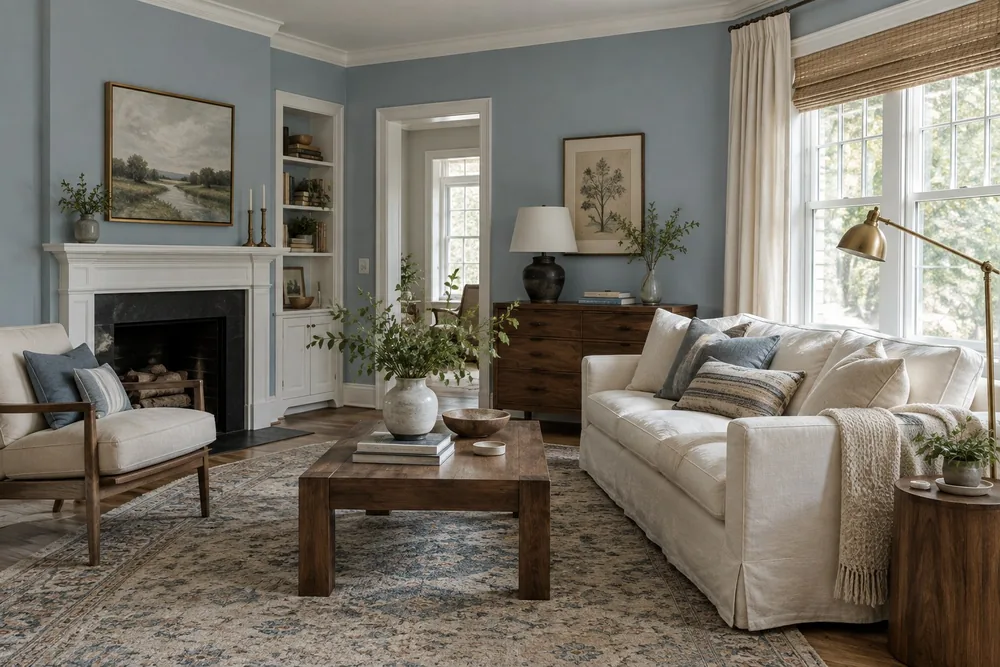
Judge Krypton under the light you actually use, rather than expecting one constant screen appearance. Its LRV is 52; the key concern is a blue-gray that can support both metal and wood . Krypton's slate-gray undertone tempers its blue, providing a specific direction to compare against paler Misty or North Star.
Why the brushed nickel and warm oak relationship matters
Brushed nickel favors one part of the palette while oak supplies warmth, so judging against metal alone would be incomplete.
Krypton has an LRV of 52; Sherwin-Williams Misty SW-6232 is 64. The difference is 12 points, with Misty returning more light under the reference measurement.
Keep the surroundings in the test
Track which part of Krypton feels most prominent in each condition: the main hue, its grayed quality or its depth. Keep brushed nickel and warm oak in the view. This creates a usable record of the palette instead of a list of apparently different colors produced by phone exposure.
A lighting result needs a practical decision
Use both materials in the test rather than deciding from the metal alone. The physical-sample checklist covers that related choice.
Record the condition that made Krypton least convincing as well as its best view. If only a short period of daylight works, change the color or the room plan rather than ignoring the hours when the space is occupied. The north-facing room assessment covers that related choice. Before ordering samples, compare room-planning features in the paint color visualizer roundup.
Sources & notes
Color specifications: Sherwin-Williams Krypton SW-6247. The recorded LRV is 52. Named comparison values come from the respective manufacturers; material schemes are editorial suggestions.
This guide reviews published color information and proposes practical sample checks. It does not claim first-hand paint testing or customer-review scores. Sherwin-Williams does not sponsor or endorse this site. Product names and trademarks belong to their respective owners. Confirm the color in a physical sample and select the coating for the actual surface and finish.